To create a welcome email, decide what you want new subscribers to do first, write a clear subject line, thank them for joining, tell them what they will receive and how often, deliver anything you promised, and end with one call to action. Then set it up as an automation so it goes out the moment someone subscribes, while their interest is at its highest.
This guide walks you through each step, with a ready-to-adapt structure, examples for different businesses, subject line ideas, and how to set up an automated welcome email in Mailpro.
What is a welcome email?
A welcome email is the first message a new subscriber or customer receives after signing up for your newsletter, creating an account or making a first purchase. An automated welcome email is sent by your email platform as soon as the sign-up happens, with no manual work.
It is the first real contact between your brand and the subscriber in their inbox. It confirms that the sign-up worked, introduces your brand's personality and values, and shows what the subscriber will get from your emails, so the relationship starts on the right foot.
Why are welcome emails important?
- First impressions matter. The welcome email sets the tone for every email that follows. A useful, well-designed message makes people look forward to the next one.
- Peak attention. A new subscriber has just chosen to hear from you, so welcome emails are typically among the most opened and clicked messages a brand sends.
- Personalization from day one. You can tailor the message with the subscriber's name and the interests or source they signed up with.
- Trust and loyalty. Introducing your brand, your values and what you stand for builds trust before you ask for anything.
- Lead nurturing. A welcome email is the first step of your nurturing path and guides new contacts toward a first purchase, booking or reply.
- Better deliverability. Early opens and clicks are positive engagement signals for mailbox providers, and a clear welcome reduces the risk of people forgetting they subscribed and reporting you as spam.
How to write a welcome email in 7 steps
1. Define the goal of your welcome email
Pick one main action: make a first purchase, read your best article, complete a profile, book a demo or follow your brand on social media. Everything in the email should support that action.
2. Write a clear subject line and preheader
The subject line is the first thing subscribers see, so keep it short and clear and confirm they are in the right place. Add the name of your brand, a personal touch or the gift they were promised. Use the preheader to complete the message. A great subject line sets the stage for a successful welcome email.
3. Say thank you and confirm the sign-up
Open with a warm, simple thank you and use the subscriber's first name if you have it. One or two sentences are enough.
4. Set expectations
Tell subscribers what they will receive (news, tips, offers, event invitations), how often you will write, and how they can update their preferences. Clear expectations reduce unsubscribes and spam complaints later.
5. Deliver what you promised
If the sign-up form offered a discount code, a guide or free shipping, put it right at the top. Never make people hunt for their welcome gift.
6. Add one clear call to action
Guide subscribers to the next step with one clear and compelling call to action (CTA): shop the latest collection, read the getting-started guide or follow you on social media. With Mailpro's editor you can create CTA buttons in the style, color and size that match your brand, and change the text and link in a few clicks.
7. Design for mobile and your brand
Use your logo, brand colors and a single strong image, keep paragraphs short and make sure the email reads well on a phone. Newsletters built with Mailpro's drag-and-drop editor are responsive, so your welcome email adapts to smartphones, tablets and desktops without any coding.
Welcome email structure you can copy
| Block | What to write | Example |
|---|---|---|
| Subject line | Confirmation + benefit | "Welcome to Green Leaf, here's your 10% code" |
| Preheader | Completes the subject | "Plus our 3 best-selling plants for beginners" |
| Greeting | Thank you + name | "Hi Anna, thanks for joining us!" |
| Promise | The gift or content promised | Discount code, guide download, free trial access |
| Expectations | What, how often | "Every Thursday: care tips and new arrivals" |
| Call to action | One main button | "Shop the collection" |
| Footer | Contact, social links, unsubscribe | Company address, preferences link, unsubscribe link |
Welcome email examples by business type
Online store
Subject: Welcome! Your 10% code is inside
Body: Hi {FirstName}, thanks for joining. Here is your welcome code: WELCOME10, valid on your first order. Every week we share new arrivals and styling ideas. CTA: Start shopping.
Newsletter or blog
Subject: You're in: here's where to start
Body: Hi {FirstName}, welcome to our newsletter. Every Tuesday you'll get one practical tip in under five minutes. To get started, here are our three most-read articles. CTA: Read the first article.
Software or service
Subject: Welcome aboard, let's set up your account
Body: Hi {FirstName}, your account is ready. Most new users start by importing their contacts; it takes about two minutes. If you need help, just reply to this email. CTA: Complete your setup.
Local business or association
Subject: Welcome to the club, {FirstName}
Body: Thanks for signing up. You'll be the first to hear about events, opening hours and member offers. Our next event is on [date]. CTA: See upcoming events.
For ready-made designs, browse our welcome email templates and adapt one to your brand.
Should you send one welcome email or a welcome series?
One email is enough to start. Once it works, many brands add a short series of two or three messages spaced a few days apart:
- Email 1 (immediately): thank you, the promised gift, expectations, one CTA.
- Email 2 (2-3 days later): your story, values or best content, social proof such as reviews.
- Email 3 (about a week later): a reminder of the offer or a next step, such as a product recommendation or a demo invitation.
If someone buys or converts after the first email, remove them from the rest of the promotional series so the messages stay relevant.
How to create an automated welcome email using Mailpro
- Access your Mailpro account: log in and open the main menu.
- Go to Automations: click "Automations" in the main menu to access the automation features.
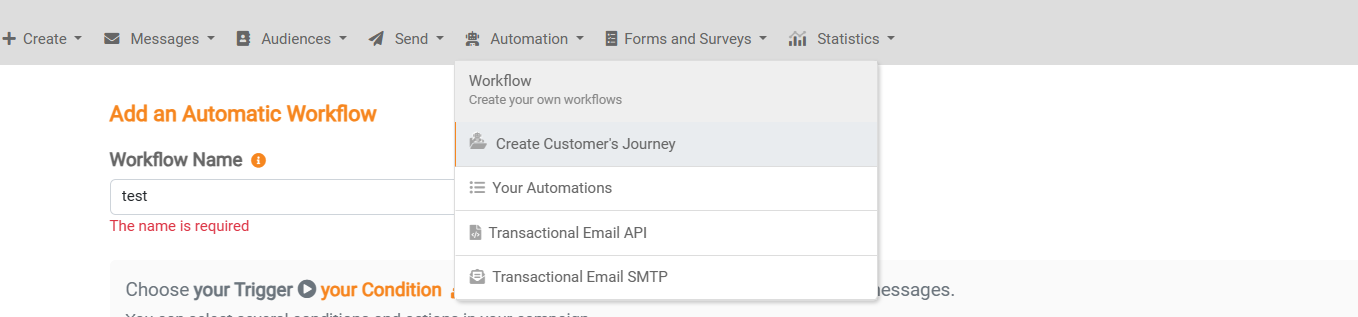
- Create a customer's journey: click "Create Customer's Journey" to start building your welcome workflow.
- Select "Welcome New Subscribers": choose this option as the trigger for your automation.
- Name your workflow: give it a descriptive name so you can find it later.
- Select the email list: choose the list whose new subscribers should receive the welcome email.
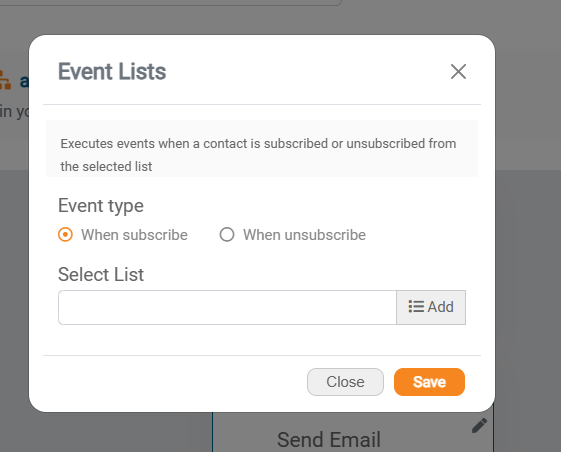
- Choose the welcome email message: select the email you want to send from your email templates or create a new one.

- Finalize the setup: once everything is configured, click "Save." Your automated welcome email is now active and goes out to every new subscriber on that list.
Combine it with a sign-up form on your website so new contacts enter the list and receive the welcome email automatically. If you use double opt-in, see how to configure double opt-in: the confirmation email comes first and the welcome email follows once the address is confirmed.
Want your welcome email to go out on its own? Set it up once with Mailpro automated emails.
How to personalize your welcome email with Mailpro
Mailpro lets you personalize campaigns with dynamic fields, so each subscriber feels recognized from the moment they join.
- Address subscribers by name: instead of "Dear Subscriber," add the "{FirstName}" dynamic field to your template and Mailpro fills it in with each subscriber's first name when the email is sent.
- Tailor content to interests: if your sign-up form asks for preferred topics or product categories, segment your list and adapt the welcome content to each segment.
- Use the sign-up source: someone who joined from a webinar page needs a different welcome than someone who joined at checkout.
- Personalize the offer: a first-purchase discount, a tailored promotion for a favorite category or a free resource linked to their interest grabs attention and drives engagement.
Welcome email best practices
- Send it immediately. A welcome email that arrives days later loses most of its impact.
- Keep it concise. Highlight your value proposition, key benefits and one clear CTA; save the rest for later emails.
- Use a recognizable sender name so subscribers know who is writing.
- Invite a reply. A simple question ("What brought you here?") starts a conversation and tells you what subscribers want.
- Include an unsubscribe link and your contact details in the footer, as in every marketing email.
- Test and iterate. Try different subject lines, visuals and offers with A/B testing and keep what works best for your audience.
Common welcome email mistakes to avoid
- Sending a generic "Thanks for subscribing" with no next step.
- Hiding the promised discount or download at the bottom.
- Asking for too much at once: buy, follow, review and refer in the same email.
- Long blocks of text that are hard to read on a phone.
- Never reviewing the email after setting it up, so it shows old offers or broken links.
Frequently asked questions about welcome emails
When should I send a welcome email?
Right after the sign-up, automatically. That is when subscribers are most likely to open it and still remember why they joined.
How long should a welcome email be?
Short: usually a few short paragraphs, one main image and one call to action. If you have more to say, spread it across a welcome series.
What should I put in the subject line of a welcome email?
Confirm the sign-up and mention the main benefit, for example "Welcome to [Brand], here's your guide." Keep it clear rather than clever, and include the gift if you promised one.
What is the difference between a welcome email and a confirmation email?
A confirmation (double opt-in) email asks the subscriber to click a link to confirm their address. The welcome email comes after that confirmation and starts the relationship with content, expectations and a first call to action.
Conclusion
A good welcome email thanks new subscribers, delivers what you promised, sets expectations and gives one clear next step. Set it up once as an automation, personalize it, test it and you will make a strong first impression with every new contact, from the moment they join your email list.
Related guides: opt-in email examples · email list building ideas · best bulk email software
Mailpro and welcome emails
Your welcome email, sent automatically
Build your welcome email in the Mailpro drag-and-drop editor and send it automatically to every new subscriber. Swiss-hosted and GDPR-native.